
Key Moments
Just like last time, I ran into a few roadblocks during the process.
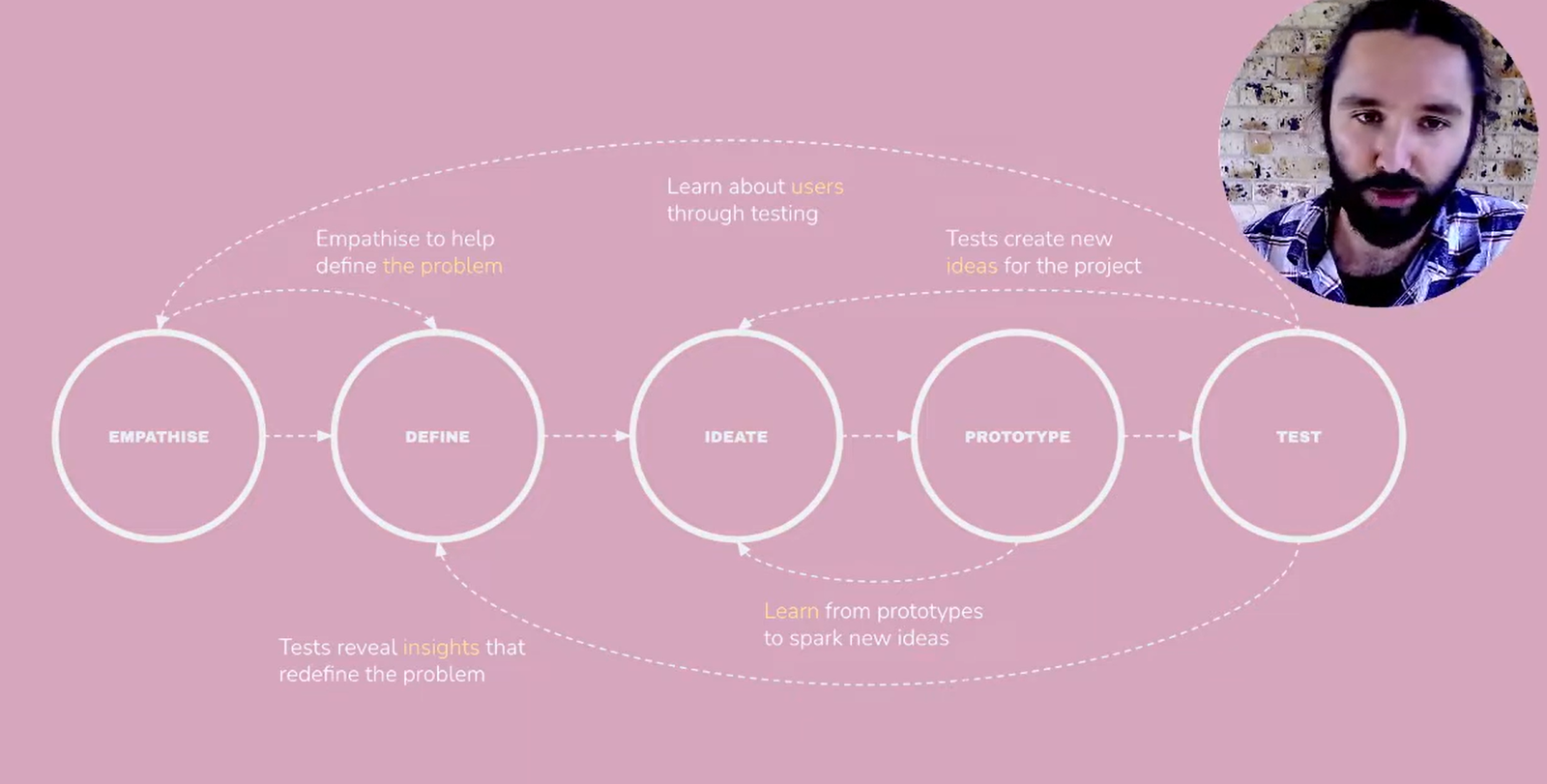
Key Moment 1: At the empathising phase of my DA process I was looking for examples of online political content that I might be able to take inspiration from. Once again, I found the design thinking process to be an incredibly helpful tool.
I initially thought I'd end up making something like this post:
And here's where the design process came in handy. Because taking the time to really empathise with my audience and understand why they might skip political content helped me to define my problems. I realised that a lot of political content has a clear agenda behind it, which is going to turn off anyone who isn't already aligned with that agenda.
So while this style of video is popular, I found that when trying to write and record the videos, I didn't feel like it was the best way to get my point across. Videos like this are great for reacting to what someone said, or calling out a bluff in an interview, but I wanted to make content that could be read and understood visually, rather than preaching to someone down a camera. I also considered that as an alternative gender non-conforming person, I would lose engagement from my target audience just by looking the way I do, in the sense that a lot of people are quick to scroll on past someone who looks outside of their social sphere.
And that brings me to Key Moment 2: I found a fascinating article online about different ideation methods.
One of the methods was very useful for my DA: Bodystorming
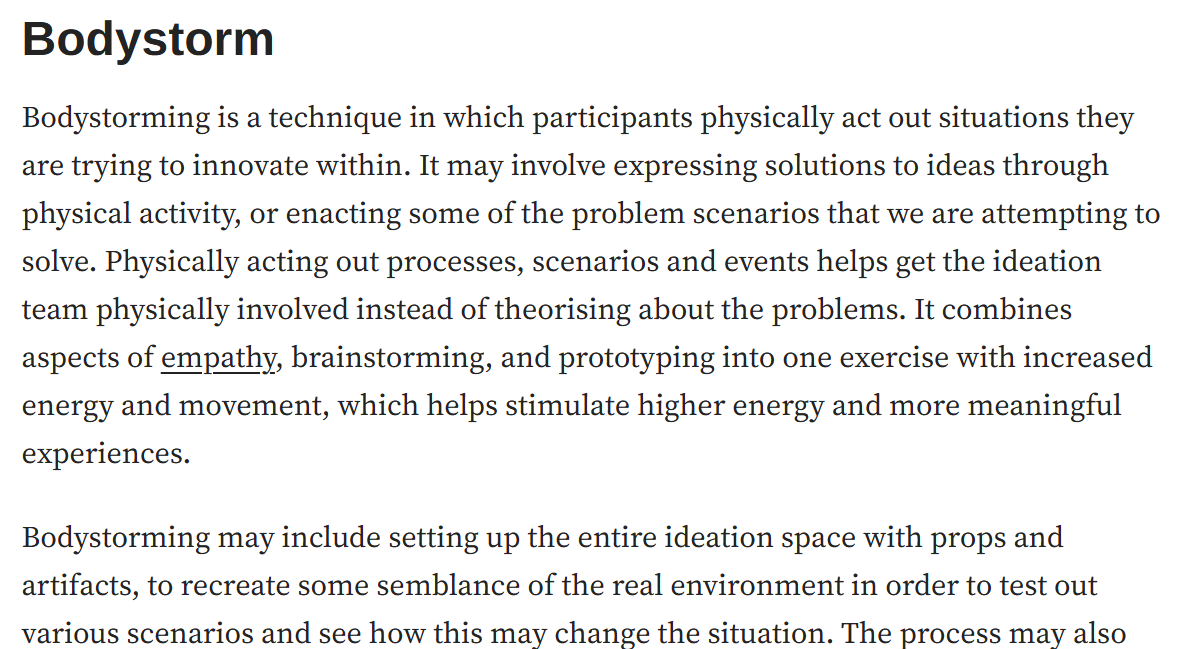
The way I utilised this method was by creating a new Instagram account and searching for national news. This allowed me to view things through the eyes of my target audience, and understand what they see online and why.
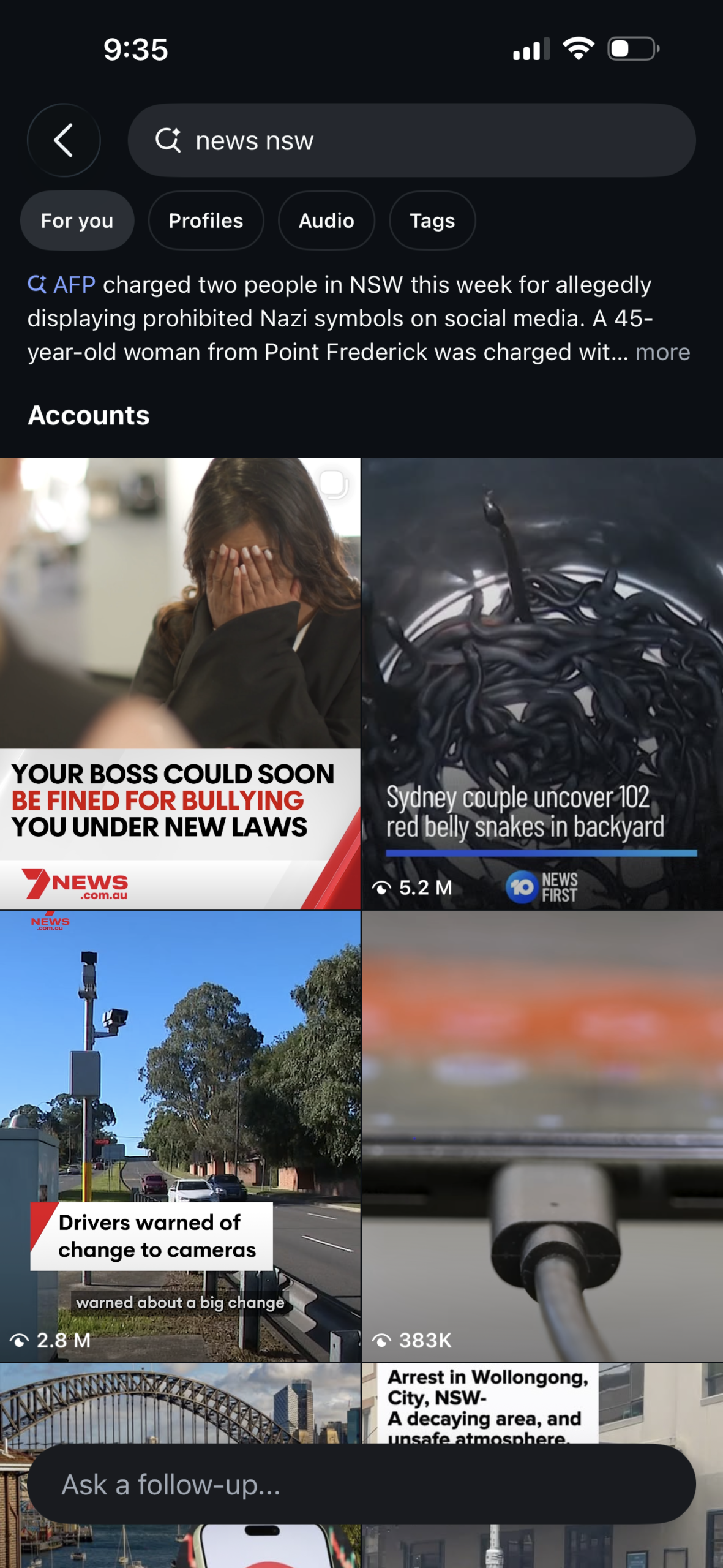
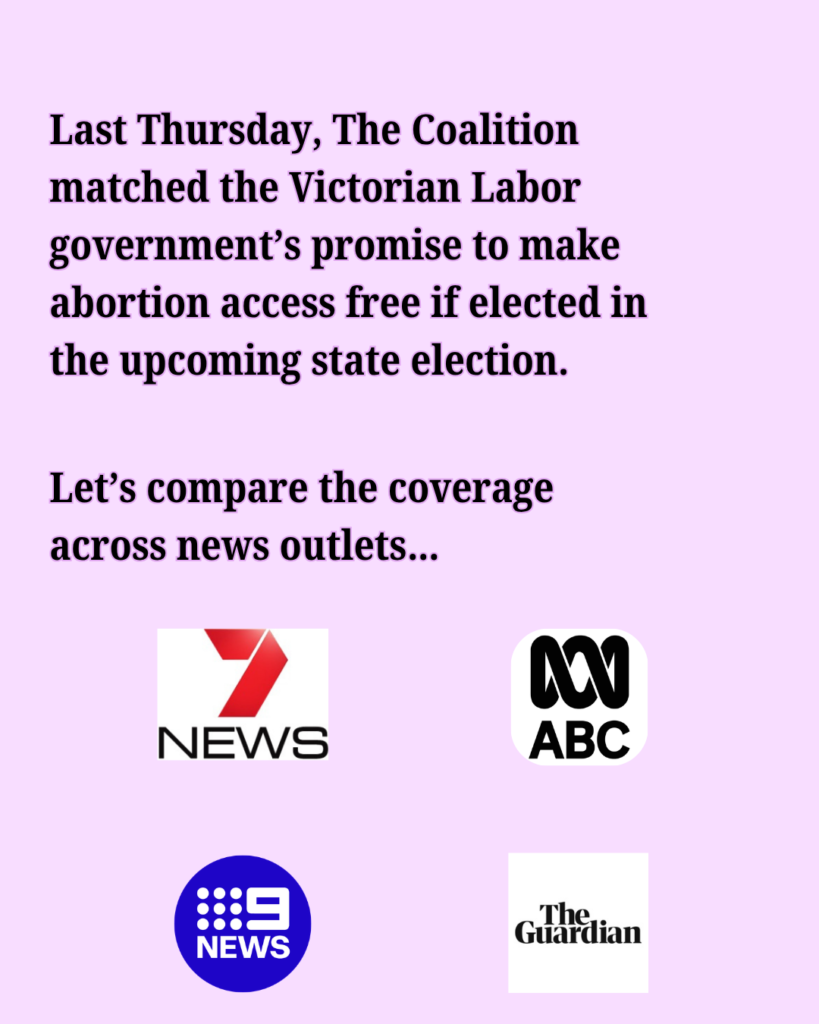
This made me change my approach because I realised that if I covered multiple news outlets and compared their coverage of the same story, it would hopefully reach a larger audience by covering all bases.
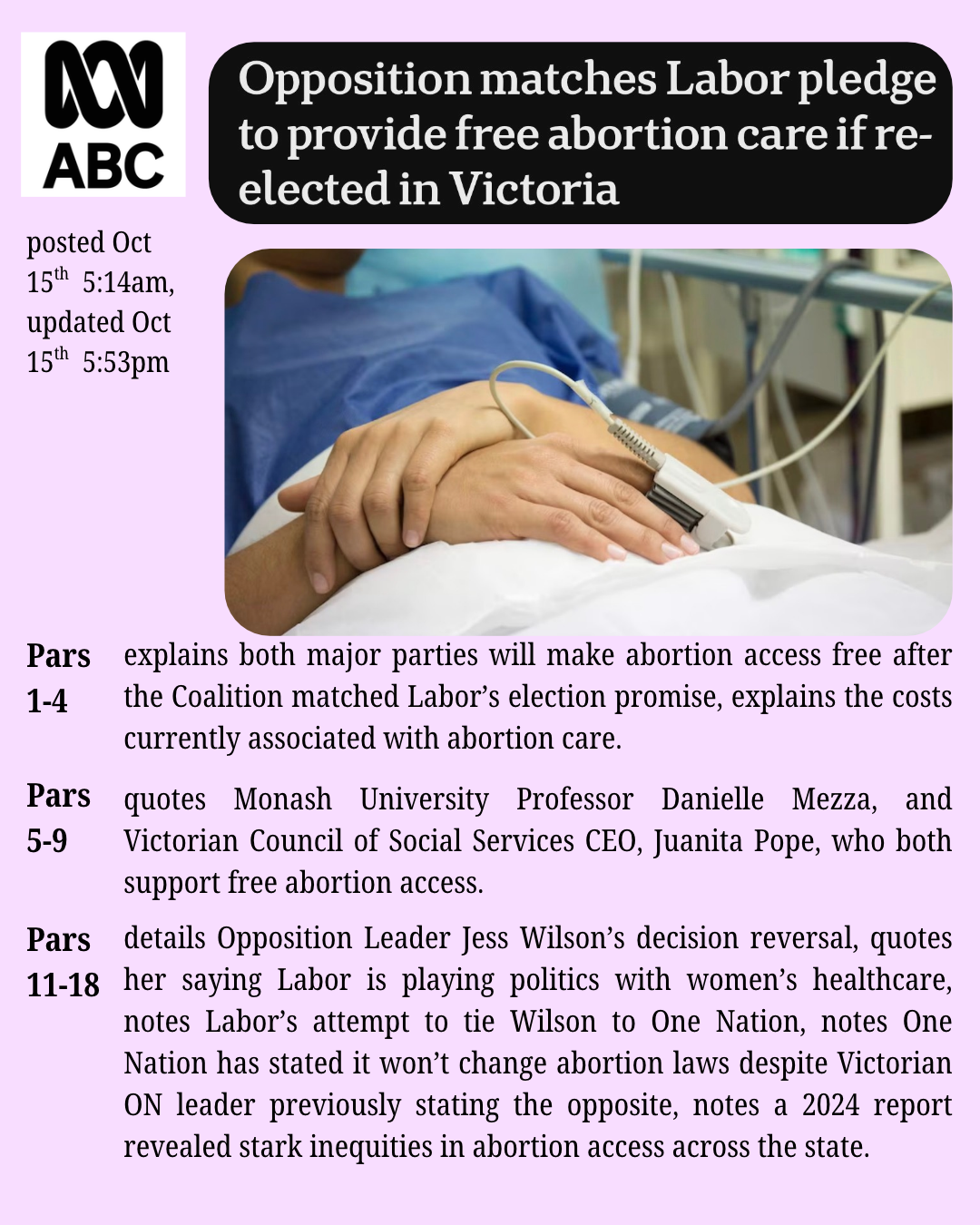
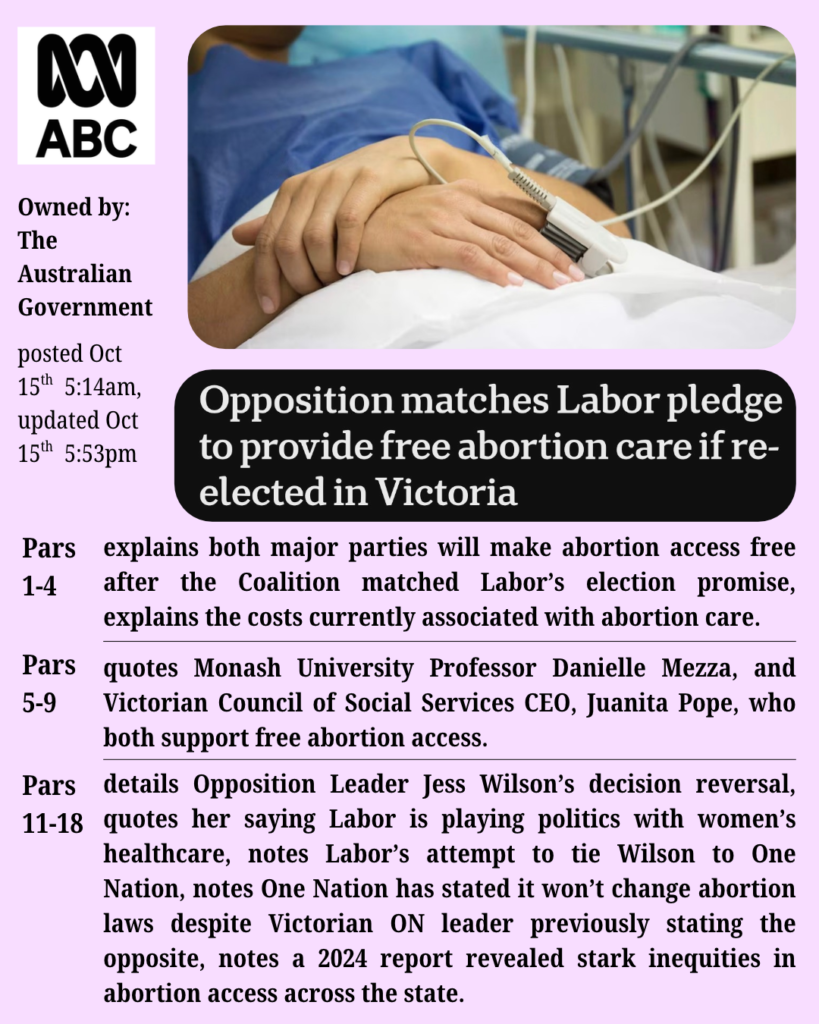
As you can see here, my first design is pretty similar to what I ended up with, but there are a few changes I made to make the design a little more readable. In the first design (left), the headline is at the very top of the page, and I hadn't added any information about the ownership of each news outlet. But after lookingn through other online news articles on social media, I noticed that the headline is actually often at the bottom or middle of the post. I realised the eyes don't usually go to the top of a post when you scroll on to a new reel. I also decided making the font bold would make it more readable.
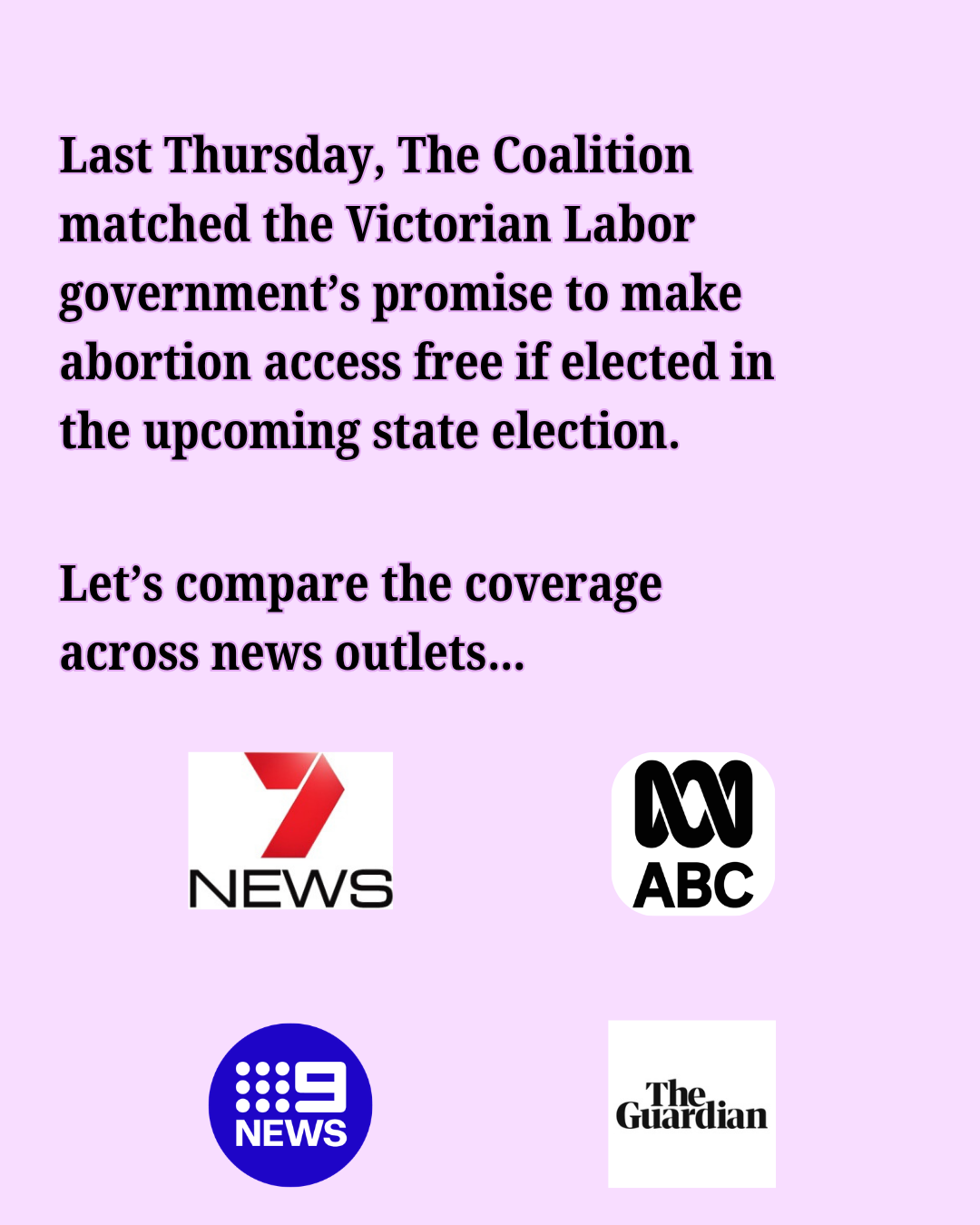
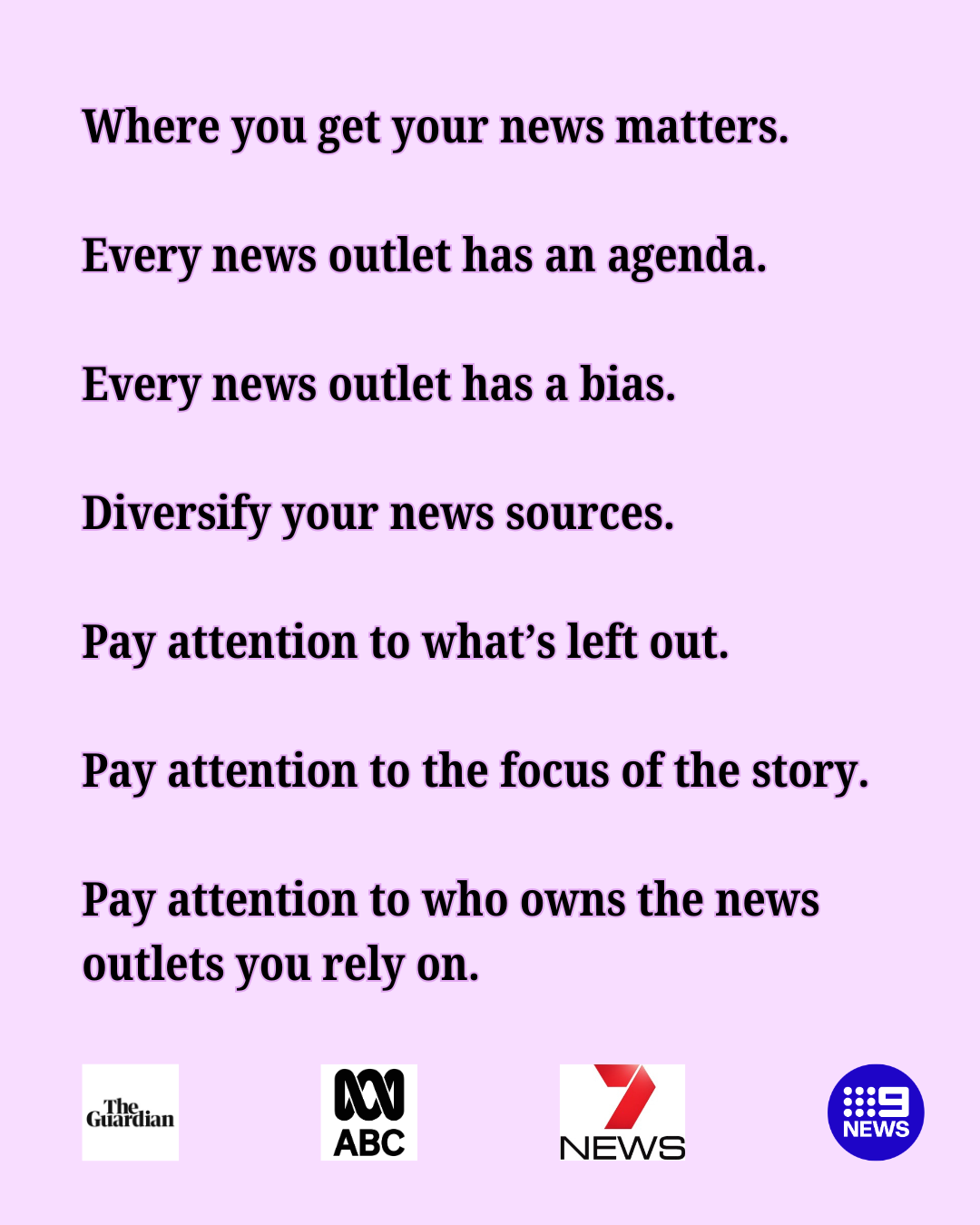
After my bodystorming experience, I knew I wanted to make the post appear as neutral as possible. The idea behind the post here is that my audience would see this and identify with one of the news sources as their regular reliable news sources. I was basically hoping to reel them in by making them wonder what the difference actually would be between the different sources, if any. Then, whatever side of the fence they are on, they would hopefully notice some of the differences, or learn who owns their regular news channel. But more importantly, I knew I wanted to end with something a little more impactful and direct, to remind my audience why I'm making these posts in the first place.
My idea was heavily inspired by the 'split headline' trend that I talked about in this LinkedIn post
The split headline is basically a great way to show how differently a story is framed, depending on who's telling it. I really love Ground News for their use of this format. It can be an extremely revealing and effective method. I started to wonder how I might take it one step further, or put my own twist on this format. Ultimately, I decided I could compare not just the headlines, but the full story paragraph by paragraph. The reason why is because it reveals what each outlet deems the focus of the story, what they prioritise and in what order. That kind of stuff really matters for those with a keen eye.
Peer Discussion
We had another peer discussion and it was so much fun! But it was also so helpful and validating to share some of the struggles and successes of our journeys. I was in a group of four: Alex, Hayleigh, Katie, and myself. We formed our group out of commonalities between our projects like the framing themes or the sustainable development goal. Hayleigh and I both had Quality Education as our goal, so it was awesome to share some of our experiences together.
Something we all seemed to struggle with was overcoming creative block, which as I mentioned earlier, I overcame through the process of bodystorming. Something we all struggled with was getting feedback in our testing phases, for various reasons. Most of us regretted not getting something made earlier, as it meant we could only get feedback in the final stages of the DA process, limiting our opportunities to repeat the testing cycle.
Something that Katie and I also both had to overcome was getting better engagement outside of our online echo-chambers. We all agreed that an unfortunately effective way to do this is to use hashtags or buzz-words that farm engagement from your target audience. For example, if I were to post my DA again, I would use hashtags like #woke or #liberal so I could land on the algorithms of people who engage with those things.
Key Takeaways
One of the first takeaways that comes to mind from this process is that it's so easy to get caught up ideating that you might forget to start prototyping as early as possible. This can mean losing out on valuable feedback in the early stages of the process. I think overall my DA was still something I was proud to put my name on, but I would have loved the chance to ask my peers what they thought when I was first designing, instead of just before posting.
Making this DA was a really interesting experience that helped me understand how useful it is to literally role-play your target audience to find the solutions you're after. The process of bodystorming really made me understand the importance for media literacy to be considered part of any quality education.
I think my DA really did deliver on my sustainable development goal of quality education, that is, within the reasonable frame I set myself. My goal was to make content that the average person could engage with, and hopefully have some minor revelation in noticing the differences between news sources. I think I did achieve that, but if I could do it again, I would want to post multiple posts, experimenting with different remixing formats. Only trying one remixed media format was not really what I had in mind at the ideation phase, but with all the research and experience I gained through the process, I can't wait to try some others as I continue to post on the account!
If I were to offer up some advice for someone else taking on the same process, it would be: GET FEEDBACK AT EVERY STAGE!
Got an idea? Ask a friend about it. Looking for inspiration? Ask a friend. Not sure about your formatting? You get where I'm going with this. Basically, I wish I had asked for feedback at every stage, just to have something to work on and go off. The key to making these DAs is to keep the momentum up. You can do that by consistenly striving for improvement.
And that's about it, folks!
Til next time :p